
Welcome to the Luffa.info loofah sponge growing page. Here are photos and videos with step by step descriptions of luffa sponge gourds being planted and grown in the home garden. Luffa vines are a long season annual that can be grown from plants in USDA zones 6 or warmer and from seed in zones 7 or warmer. A few determined individuals have grown them further north by starting very early inside or using a greenhouse.
Growing luffa plants requires a certain amount of patience. It's not a typical garden plant. It grows for a longer time than most gourds. Sometimes the seeds can be slow to germinate. Luffa is a hot weather plant and growth slows in cool weather. The flowers appear over an extended period of time blooming sequentially as the vine progresses. The vines can grow 30 feet(10m) or more over the course of a growing season. Once the fruits form it may take a long time to fully develop fiber and dry for harvest. Then the work of picking, peeling, and cleaning happens late in the year. Luffa requires about 150 to 200 or more warm frost free days, depending on the location and variety grown. It needs lots of sun, warmth, water, good root nutrients, and a large strong trellis. The vines will grow on the ground on a well drained weed-free flat surface but tend to produce curved loofahs. Luffa can also be grown in containers around 5 gallon size. Containers must have good drainage and can't be moved once the vines attach tendrils to other objects. A small pot starter trellis can be used in the container until it is permanently located. The ideal soil ph is neutral to slightly alkaline. Some lime may be needed for acid soils.
Besides the commonly grown Luffa aegyptiaca, Luffa acutangula and Luffa operculata are cultivated in a similar manner. Even though all grow on vines, the angled luffa and ball luffa may have different growth characteristics. Typically angled luffa will grow most of the vine vegetation before producing and make a large number of pods at once. The smooth luffa I grow will produce at nodes along the way as the vine continues to grow.
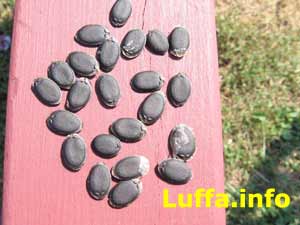 The first step is to select seeds for planting. Good
mature seeds are typically dark and hard. Immature seeds are a light
color and are softer. Luffa seeds look similar to watermelon seeds. Save
the seeds from your best loofahs in the fall for the next year. Seeds
can be obtained from the suppliers on our sources
page. Luffa can be grown by directly planting into the ground in warmer
climates, USDA zones 7 and higher. Plant 3 to 4 seeds per location about
3/4 inch deep in well drained soil. Starting seeds early in pots early
often gives better germination and can provide an early start on the
growing season. Space plantings a minimum of 3 feet(1m) apart. 6
feet(2m) is much better. Average soil temperature must be around 70
degrees F (21C) or warmer for seeds to sprout and plants to grow.
The first step is to select seeds for planting. Good
mature seeds are typically dark and hard. Immature seeds are a light
color and are softer. Luffa seeds look similar to watermelon seeds. Save
the seeds from your best loofahs in the fall for the next year. Seeds
can be obtained from the suppliers on our sources
page. Luffa can be grown by directly planting into the ground in warmer
climates, USDA zones 7 and higher. Plant 3 to 4 seeds per location about
3/4 inch deep in well drained soil. Starting seeds early in pots early
often gives better germination and can provide an early start on the
growing season. Space plantings a minimum of 3 feet(1m) apart. 6
feet(2m) is much better. Average soil temperature must be around 70
degrees F (21C) or warmer for seeds to sprout and plants to grow.
 For areas where the growing season time is
marginal, starting the seeds in pots well ahead of the last frost date
is a better choice and is highly recommended for zone 6 growers. Seeds
planted outdoors in zone 6b will often result in many of the loofahs not
reaching maturity and being lost to frost in the fall. Planting seeds
outdoors in zone 6a will result in most or all of the loofahs not
reaching maturity. The plants develop large roots and should be planted
in containers that are big enough for the time needed. Seeds often vary
in size and the planting depth should be deeper for larger seeds. Plant
2 or 3 seeds about 1/2 to 3/4 inch deep in potting soil. Germination
speed and growth is very dependent on soil temperature so place pots in
a warm place. Keep the soil moist but not too wet. Germination time can
vary widely. It could take weeks. Typically it is 7 to 14 days but can
be as short as 4 or 5 days for fresh seeds in ideal conditions. Luffa
seed germination rates can vary widely, about 50 to 80% for ideal
planting conditions. Some seeds may take longer than others from the
same batch. Applying small amounts nitrogen fertilizer to the seedlings
will help keep the plants green.
For areas where the growing season time is
marginal, starting the seeds in pots well ahead of the last frost date
is a better choice and is highly recommended for zone 6 growers. Seeds
planted outdoors in zone 6b will often result in many of the loofahs not
reaching maturity and being lost to frost in the fall. Planting seeds
outdoors in zone 6a will result in most or all of the loofahs not
reaching maturity. The plants develop large roots and should be planted
in containers that are big enough for the time needed. Seeds often vary
in size and the planting depth should be deeper for larger seeds. Plant
2 or 3 seeds about 1/2 to 3/4 inch deep in potting soil. Germination
speed and growth is very dependent on soil temperature so place pots in
a warm place. Keep the soil moist but not too wet. Germination time can
vary widely. It could take weeks. Typically it is 7 to 14 days but can
be as short as 4 or 5 days for fresh seeds in ideal conditions. Luffa
seed germination rates can vary widely, about 50 to 80% for ideal
planting conditions. Some seeds may take longer than others from the
same batch. Applying small amounts nitrogen fertilizer to the seedlings
will help keep the plants green.
 Thin plants to one per pot or planting location.
The seedlings grow slowly while the roots develop. Provide lots of sun
and don't let the soil get too dry. Small pots may need water every day
but don't over water. The plants can't survive muddy waterlogged soil.
These plants were started in 4 inch(10cm) pots which is good for about a
one month early start. If the luffa plants will be in pots for longer
than a month a 5 or 6 inch(13-15cm) pot would be better. A small pot
trellis may be needed when starting plants inside more than a month
early. Sticks and string can work. We reuse our plastic pots but peat
pots are another environmentally friendly way to start plants. Plantable
peat pots minimize root damage and transplant shock. Tearing the bottom
and side when planting will help the roots grow out.
Thin plants to one per pot or planting location.
The seedlings grow slowly while the roots develop. Provide lots of sun
and don't let the soil get too dry. Small pots may need water every day
but don't over water. The plants can't survive muddy waterlogged soil.
These plants were started in 4 inch(10cm) pots which is good for about a
one month early start. If the luffa plants will be in pots for longer
than a month a 5 or 6 inch(13-15cm) pot would be better. A small pot
trellis may be needed when starting plants inside more than a month
early. Sticks and string can work. We reuse our plastic pots but peat
pots are another environmentally friendly way to start plants. Plantable
peat pots minimize root damage and transplant shock. Tearing the bottom
and side when planting will help the roots grow out.
 Once the seedlings send out the first normal leaf
or two, the luffa plants are big enough to transplant. The roots by this
time may be 6 inches (15 cm) long or longer. Wait until all danger of
frost is passed and the soil is warm. Cool overnight air temperatures
don't seem to hurt them but an extended cold spell can stop their
growth. The average soil temperature needs to be warm enough. Luffa are
somewhat sensitive to transplant shock so be careful when planting.
Leaving the plants outside a couple days before planting helps them to
adapt. Luffa plants prefer good well drained soil but tolerate a fairly
wide range of soil types. Working some organic compost into the ground
before planting can help feed the roots. Plants need nitrogen in the
seedling stage but require potash and phosphorous for blooming. It is
best to use only nitrogen to keep the seedlings green and switch to
balanced all purpose fertilizer after transplanting outdoors. If the
smaller plants receive too much potash and phosphorous they may bloom
prematurely. This will result in many early small loofahs on spindly
vines as the plant tries to put energy into pod formation instead of
growing the big vine it needs for big loofahs.
Once the seedlings send out the first normal leaf
or two, the luffa plants are big enough to transplant. The roots by this
time may be 6 inches (15 cm) long or longer. Wait until all danger of
frost is passed and the soil is warm. Cool overnight air temperatures
don't seem to hurt them but an extended cold spell can stop their
growth. The average soil temperature needs to be warm enough. Luffa are
somewhat sensitive to transplant shock so be careful when planting.
Leaving the plants outside a couple days before planting helps them to
adapt. Luffa plants prefer good well drained soil but tolerate a fairly
wide range of soil types. Working some organic compost into the ground
before planting can help feed the roots. Plants need nitrogen in the
seedling stage but require potash and phosphorous for blooming. It is
best to use only nitrogen to keep the seedlings green and switch to
balanced all purpose fertilizer after transplanting outdoors. If the
smaller plants receive too much potash and phosphorous they may bloom
prematurely. This will result in many early small loofahs on spindly
vines as the plant tries to put energy into pod formation instead of
growing the big vine it needs for big loofahs.

While the luffa plants are small they are vulnerable to weeds and pests. It is important to keep the weeds off them. Shade from weeds will stunt the plants at this point. Slugs can damage the small stems. Birds may snip off pieces. Too much rain can drown them. Black plastic or dark mulch around the small luffa plants will help warm the soil and reduce weeds. Mulching increases yields in the long term. Once the plants begin to bolt and grow larger the luffa vines are tough enough to mostly fend for themselves. The vines will climb over most obstacles. The biggest weed problems are usually vines like morning glories.
 The luffa vines must have a strong
trellis system to climb. We grow most of ours on chain link fence
because it is already there. The vines prefer to grow much taller and
will do better on a 6 to 10 feet (2-3m) high trellis. The vine length
can exceed 30 feet(9m). The loofah sponges can get heavy, so the more
places the vine tendrils can hold on to the better. They won't grow as
well on a single cable as they do growing into lattice or fence links
with many support points. Luffa will circle and climb wooden poles if
the surface is rough enough. They can also climb on walls with a rough
surface. Training the vines to go where you want can be accomplished by
gently wrapping the tendrils around supports in the desired direction.
The vines are moderately flexible until they get large.
The luffa vines must have a strong
trellis system to climb. We grow most of ours on chain link fence
because it is already there. The vines prefer to grow much taller and
will do better on a 6 to 10 feet (2-3m) high trellis. The vine length
can exceed 30 feet(9m). The loofah sponges can get heavy, so the more
places the vine tendrils can hold on to the better. They won't grow as
well on a single cable as they do growing into lattice or fence links
with many support points. Luffa will circle and climb wooden poles if
the surface is rough enough. They can also climb on walls with a rough
surface. Training the vines to go where you want can be accomplished by
gently wrapping the tendrils around supports in the desired direction.
The vines are moderately flexible until they get large.
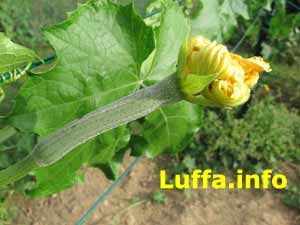 After the vines bloom pollination has to occur
before a pod will form. Bees of all types are attracted to the big
yellow flowers and perform much of the work. Ants also spend a lot of
time on luffa vines. There are small triangular leaf-like structures at
the base of the flowers that attract ants. The blooms will fall off and
the pollinated ones will form the start of a loofah sponge at the base
of the former female flower. If pollinating insects are in short supply
the flowers can be hand pollinated. Pull off a male flower and gently
rub it on the females or else use a cotton swab to move pollen between
flowers. The female
flowers are the solitary large stemmed ones. The males are located in
clusters of buds with thin stems. Both flowers are large and yellow.The
pollinated female pod will first grow into a soft edible fruit and later
will harden into a fiber filled seed pod. Ready to pick your luffa?
Visit the luffa harvest page
After the vines bloom pollination has to occur
before a pod will form. Bees of all types are attracted to the big
yellow flowers and perform much of the work. Ants also spend a lot of
time on luffa vines. There are small triangular leaf-like structures at
the base of the flowers that attract ants. The blooms will fall off and
the pollinated ones will form the start of a loofah sponge at the base
of the former female flower. If pollinating insects are in short supply
the flowers can be hand pollinated. Pull off a male flower and gently
rub it on the females or else use a cotton swab to move pollen between
flowers. The female
flowers are the solitary large stemmed ones. The males are located in
clusters of buds with thin stems. Both flowers are large and yellow.The
pollinated female pod will first grow into a soft edible fruit and later
will harden into a fiber filled seed pod. Ready to pick your luffa?
Visit the luffa harvest page
Here are 8 videos showing an entire luffa growing season from spring to fall.
Copyright © Luffa.info This page can also be reached via the domain name growloofah.com
